Let the Pins Stay on the Floor: In Defence of a Beautifully Lived-In Craft Room
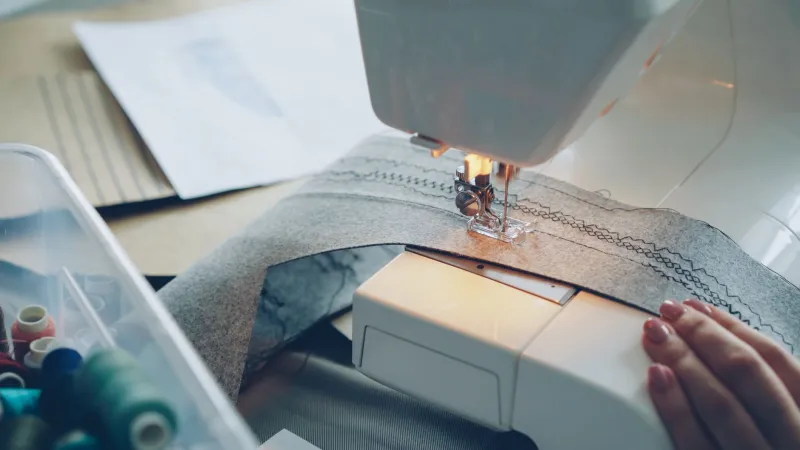
There is a particular kind of craft-room photograph that makes the heart sink. A white shelf holds six matching jars of washi tape. A pegboard displays scissors arranged by size. A single stem of eucalyptus droops artfully over a sewing machine that has clearly never met a loose thread. It is lovely. It is also a still life, not a studio.
Here at Harmony Craft, we are not against beauty. We are against the idea that a creative space has to look finished before creative work can begin. The made-up bed, the styled shelf, the colour-coordinated ribbon drawer: these are nice things to look at. They are not proof of a healthy practice. More often, they are proof of a photograph.
The shelfie is a still life, not a studio
A working craft room has evidence. It has a cutting mat with a permanent fringe of thread. It has a jar of pens that do not match. It has a half-finished quilt draped over the back of a chair because the chair is the only flat surface left. That is not failure. That is a room doing its job.
Instagram and Pinterest have given us a very narrow picture of what a creative space should be. The light is always soft. The storage is always labelled. The floor is always clear. But a room where work happens will look like work happens there. Pins fall. Offcuts multiply. A glue gun leaves a stringy bit on the table. If your room looks lived-in, it probably is being lived in.
Mess is information
Before you reach for the matching baskets, look at the mess. It is telling you something. A pile of fabric on the floor may mean you have nowhere to put a current project. A drift of receipts and pattern pieces may mean your cutting surface has become a dumping ground. A tangle of embroidery threads may mean you need a better way to store what you actually use, not a prettier way to hide what you do not.
That distinction matters. Aesthetics-led organising asks, 'How can I make this look tidy?' Function-led organising asks, 'How can I make the next ten minutes of making easier?' The second question is far more useful when you are trying to fit a creative habit around work, childcare, tea and the inevitable under-stairs cupboard that has become a general holding bay for life.
What to organise, and what to leave alone
Start with the things that slow you down. If you spend five minutes hunting for your good scissors, give them a dedicated hook. If your current project has taken over the kitchen table, give it a tray or a washing-up bowl so it can be moved in one go. If your fabric stash is a mystery, sort it by project rather than colour. A box labelled 'the quilt I keep meaning to finish' is more useful than a box labelled 'blue scraps'.
Use opaque boxes for ugly but useful things. Use clear boxes only for things you genuinely need to see. Do not force every tool into a matching jar if a battered biscuit tin works better. Keep a lidded bin for offcuts, but do not feel you have to empty it every day. Let one surface be mostly clear for actual cutting, even if it is only the ironing board. Leave the pins on the floor for a minute if you are mid-project. You can hoover later.
The goal is not a room that looks as if no one has ever made anything in it. The goal is a room that lets you start.
Reader confessions: the honest shelf
When we asked readers to share their real workspaces, the replies were a relief. 'My desk is 60 per cent fabric scraps and 40 per cent optimism,' said one. 'I have three projects on the go and one chair that is technically a drying rack,' said another. A potter told us her studio shelf is 'a museum of clay dust and good intentions'. A knitter admitted she keeps her yarn in the airing cupboard because it is the only place the cat cannot reach.
None of these people sounded chaotic. They sounded like makers. The messy studio is not a moral failing. It is often the sign of someone who would rather spend twenty minutes stitching than twenty minutes styling.
A quieter standard
Letting go of the shelfie does not mean giving up on organisation. It means choosing a different standard: not 'does this look good on camera?' but 'does this help me make things?' A lived-in craft room can still have hooks, labels and a place for everything. It can still be a pleasure to be in. It just does not have to be finished. Neither does your work.
The next time you see a perfectly styled craft room online, enjoy it and keep scrolling. Then go back to your own table. Move the pins if you need to. Put the kettle on. Start something. The room will look better once it has been used.