Envelopes, Menus, Margins: A Thirty-Minute Collage Night for When the Dark Comes Early
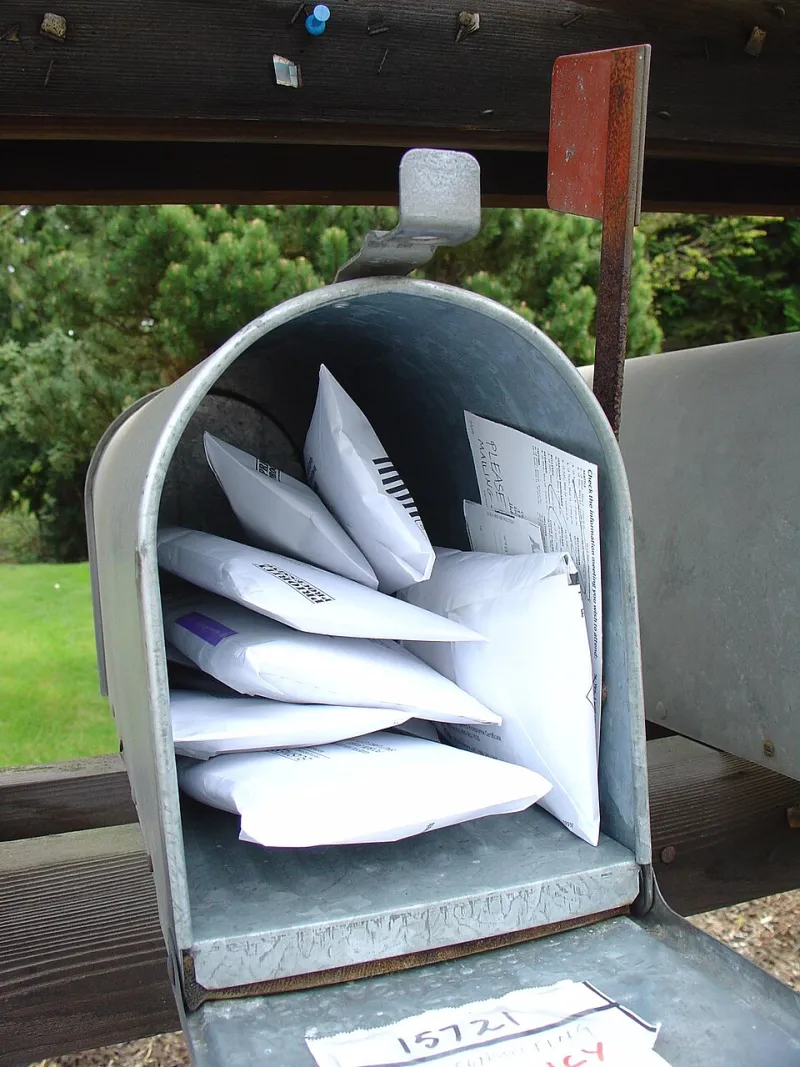
Photo: Oran Viriyincy from Bothell, WA, United States, CC BY-SA 2.0, via Wikimedia Commons
By late afternoon in November, the light has already given up. The windows go blue, the lamps come on, and the evening stretches out in front of you. It is the kind of night that makes going out feel like effort and staying in feel like scrolling. There is another option, and it costs nothing: make a small collage from the paper already sitting by the door.
This is not the kind of collage that needs a trip to an art shop. It is junk-mail collage, and it is about as low-stakes as making gets. Takeaway menus, envelopes, charity magazines, old newspaper supplements, the leaflet from the council, the catalogue that arrived with someone else's name on it. All of it can become colour, texture, type and shape.
Why junk mail works
Junk mail is free, varied and forgiving. It gives you bright food photography, strange fonts, blocks of colour, small windows, maps, patterns and words you would never think to write. Because the material is not precious, you are less likely to freeze. If you hate what you have made, you can glue over it. If you ruin an envelope, there are six more in the recycling.
It is also a quietly useful way to reuse paper before it goes out. Just be sensible: shred anything with your name, address, account details or other personal information, or cover those parts completely. This is a craft for the plain side of an envelope, the margin of a magazine, the back of a menu. Keep the personal bits out of the pile.
What you need
Nothing bought. A pair of scissors, a glue stick or a pot of PVA, and something to stick things onto: an old cereal box, a piece of scrap cardboard, or a page from a sketchbook if you have one. A timer is helpful. A lamp is essential. A cloth for gluey fingers is nice but not compulsory.
The thirty-minute structure
0 to 5 minutes: gather and tear. Do not cut neatly yet. Pull out colours, words and shapes that catch your eye. Tear some pieces roughly. Tearing gives softer edges than scissors and is faster when you are not sure what you are doing.
5 to 15 minutes: arrange without glue. Move pieces around. Try big shapes first, then smaller ones. Overlap things. Let a word sit next to a colour it does not expect. This is the part where the collage starts to tell you what it wants to be.
15 to 25 minutes: glue. Start with the biggest pieces and work upwards. Smooth them down with your hand. Do not worry about bubbles or crooked edges. They are part of the charm.
25 to 30 minutes: finish and clear a small space. Write the date on the back if you like. Put the unused paper in a folder or back in the recycling. The timer pings, and you are done.
Prompts for a solo night
- One colour only: make a collage using only blues, or only reds, from the junk mail pile.
- The window: build a piece around the transparent window of an envelope.
- A word you needed: find one word or phrase in a magazine and build the collage around it.
- Map of the week: use fragments to make an abstract map of your week, with no explanation.
- Small and square: work on a postcard-sized piece of cardboard and stop when it is full.
- No faces: use only patterns, type and blocks of colour.
If you are making it social
Invite two or three people and ask everyone to bring a bag of junk mail. Tip it all into the middle of the table. Set a timer for thirty minutes. Offer the prompts above, but do not turn it into a lesson. Put on the kettle, open a packet of biscuits, and let people work quietly or chat as they like.
A junk-mail collage night works well as a low-effort alternative to a book group, a craft club, or a night in the pub when the pub feels like too much. There is no skill barrier, no expensive kit list and no pressure to produce something good. The worst outcome is a slightly sticky table and a new pile of paper to recycle.
Why it suits dark November nights
The dark can feel like a closing in. Collage is small, contained and lamp-friendly. It does not need daylight, outdoor drying or a long stretch of concentration. It is the kind of making that fits between dinner and bed, or fills an evening when you would otherwise be aimlessly refreshing a screen.
Low-stakes making gives your hands something to do while your mind settles. It is not about producing art for the wall. It is about giving the evening a shape. You sit down with a pile of paper, you make a few decisions, you stick things down, and the timer pings. You have a small square of colour and a slightly quieter head.
Keep it low-stakes
Do not aim for frame-worthy. Put the collage in a drawer, stick it in a notebook, or leave it on the table for a few days. If you decide it is terrible, glue over it. The point is the thirty minutes, not the masterpiece. Junk-mail collage is a reminder that creativity does not always need a shopping list. It needs a bit of paper, a bit of glue, and a willingness to begin before you feel ready.